
Review Published 12th April 2026
Watch the official trailer.
A shocking tragedy at Shinjuku Station sparks a disturbing and traumatic mystery as commuters witness an unimaginable mass incident
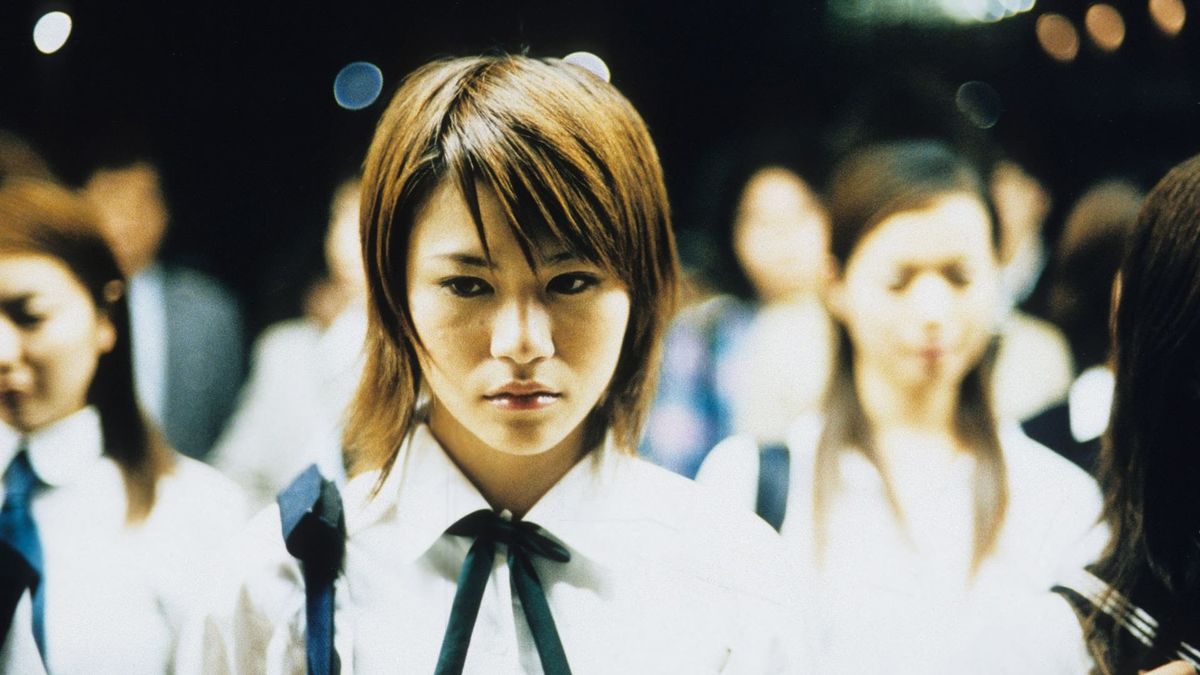
Set in Tokyo, at Shinjuku Station on May 26, Otsuki, a Tokyo-bound express train, is shortly arriving to collect passengers from track number eight. Waiting for the train are commuters, among them a group of school students. As the train approaches, a straight line of female students stands behind the yellow safety line, ready to board. However, as the train nears the platform, 54 students, all female, join hands and begin crossing the line, putting themselves in a dangerous position. Still holding hands, they begin to count together before suddenly leaping onto the tracks just as the train rushes past, killing them all instantly. Blood splatters across the train, and the impact is so severe that flesh becomes caught in its machinery. Naturally, the passengers, including those covered in blood, along with everyone who witnesses the event, are left traumatised and in shock.
A disturbing wave of suicides sparks a tense investigation led by Detective Kuroda as mysterious clues point toward an unsettling hidden pattern
At a hospital, another strange event occurs, this time involving two nurses and a security guard on duty. Another suicide has taken place. With two major crime scenes now unfolding, police launch a full investigation. Leading the case is a team of skilled detectives, including Detective Kuroda (Ryô Ishibashi), who is determined to uncover the truth behind these deaths. He remains unconvinced by those around him who dismiss the suicides as accidents, often appearing visibly frustrated by their assumptions. Kuroda’s suspicions deepen when he discovers that the schoolgirls involved were from a mix of eighteen different schools, raising even more questions. A minor breakthrough comes in the form of an anonymous tip that points officers to a mysterious website displaying a series of red and white dots. But what does it all mean? Will Detective Kuroda and his team be able to uncover the truth behind what seems like an unsolvable puzzle?

A genre blending Sion Sono film that fuses thriller, horror, and dark comedy, marking a second encounter with the director’s distinctive style
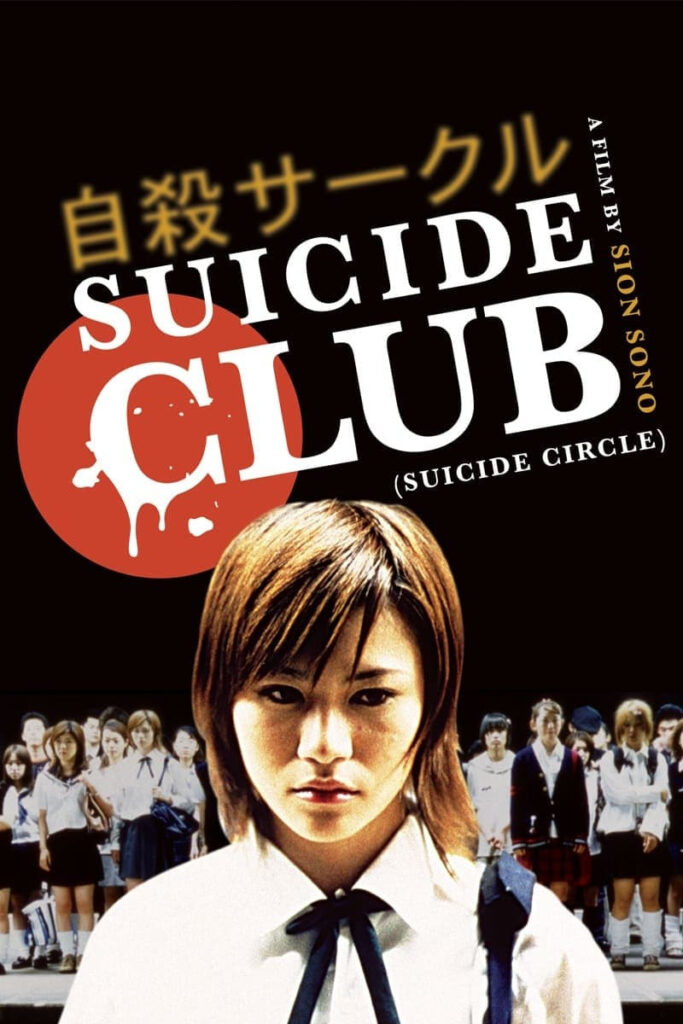
For those unaware, Suicide Club is a Japanese film that blends multiple genres, including thriller, dark comedy, splatter horror, crime, and even drama. The film was written and directed by Sion Sono, whose other works include Love Exposure, Antiporno, Coldfish, and Prisoners of the Ghostland, among many others. Personally, this marks my second experience with a Sion Sono film, my first being Prisoners of the Ghostland, which, if I’m being honest, I wasn’t a huge fan of when it was first released.
A shocking, darkly humorous horror mystery driven by an engaging investigation and strikingly intense splatter imagery
However, I’m glad to say that Suicide Club delivers a wild and heavy experience. The opening alone completely caught me off guard, leaving me genuinely shocked, jaw wide open. While that opening is undeniably confronting, it’s also clear, through the excessive bloodshed, bursts of flesh, and even the music choices, that the film leans into dark humour to slightly offset its tone. The central storyline of an investigation kept me fully engaged throughout, as, like Kuroda, I was eager to uncover what lay behind all the madness. The film’s horror elements, particularly its use of splatter, are both impressive and disturbingly realistic.


An ambitious thriller with a strong start that ultimately loses focus and underwhelms in its final act
While the film’s opening is epic and immediately engaging, and its second act builds into increasingly shocking revelations, I was genuinely disappointed by the third act and its conclusion. Several subplots are introduced that derail the core storyline, and sadly, for such an ambitious and compelling premise, the film doesn’t quite stick the landing. Many of the reveals feel vague and unfocused, leaving viewers sitting there, scratching their heads as they try to process everything that’s unfolded. I couldn’t help but feel a little let down, especially given how strong the film had been for most of its duration. The film’s choice of music was also a bit hit-or-miss for me throughout.
A shocking, visually distinctive Sion Sono thriller that grips with its mystery and intensity, but ultimately falters in a muddled and unsatisfying final act
Overall, this is absolutely not for the faint-hearted, with its confronting themes of mass suicide paired with an extreme level of gore, flesh, and splatter throughout. The opening is insanely powerful, genuinely shocking, and completely caught me off guard; it’s the kind of start that leaves your jaw on the floor. From there, it unfolds into a well-crafted mystery that pulled me in for most of its runtime, especially as the central mystery deepened and became increasingly unsettling. Visually, Sion Sono impressively brings a distinct, memorable style to the film. However, where it ultimately stumbles is in the third act. Unusual subplots begin to emerge, and while the core storyline attempts to provide answers, the execution feels muddled, vague, and not entirely satisfying. It’s frustrating because the ideas at the heart of the film are genuinely brilliant, yet bringing them together cohesively feels just out of reach.
Suicide Club (2001) is Now Available on 4K UHD thanks to Umbrella!
About the Reviewer
Peter Walkden
Film writer and curator with a deep passion for cinema, genre filmmaking, and physical media. Exploring new releases, cult favourites, and overlooked films, with a strong focus on atmosphere, storytelling, and the theatrical experience.
Connect
Instagram: https://www.instagram.com/walkdenentertainment/
Letterboxd: https://letterboxd.com/Peter_Walkden/
Website: https://walkdenentertainment.com/
More links and updates: https://linktr.ee/PeterWalkden
0 Comments