
Review published 26th October 2026
Watch the official trailer.
The Story
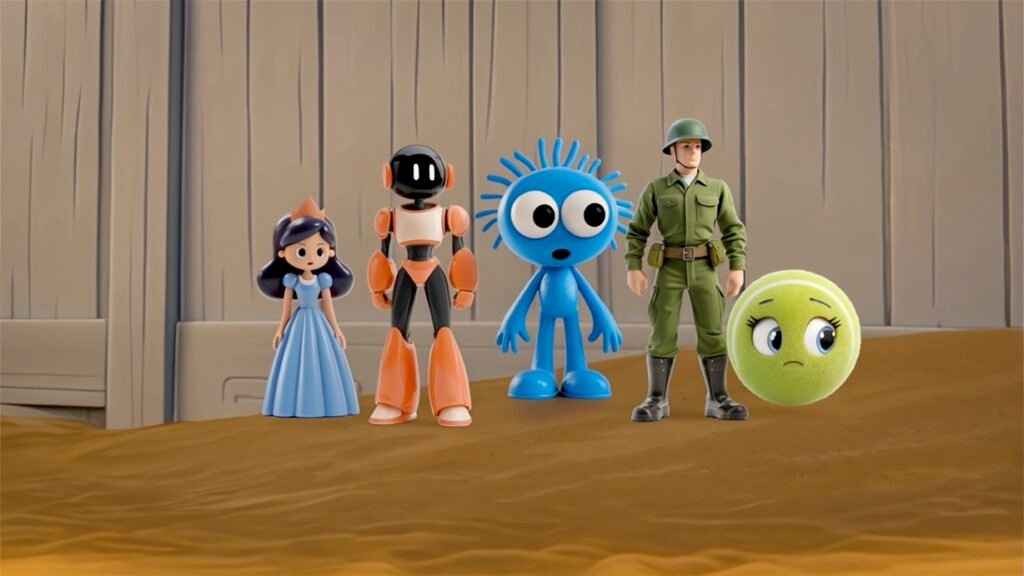
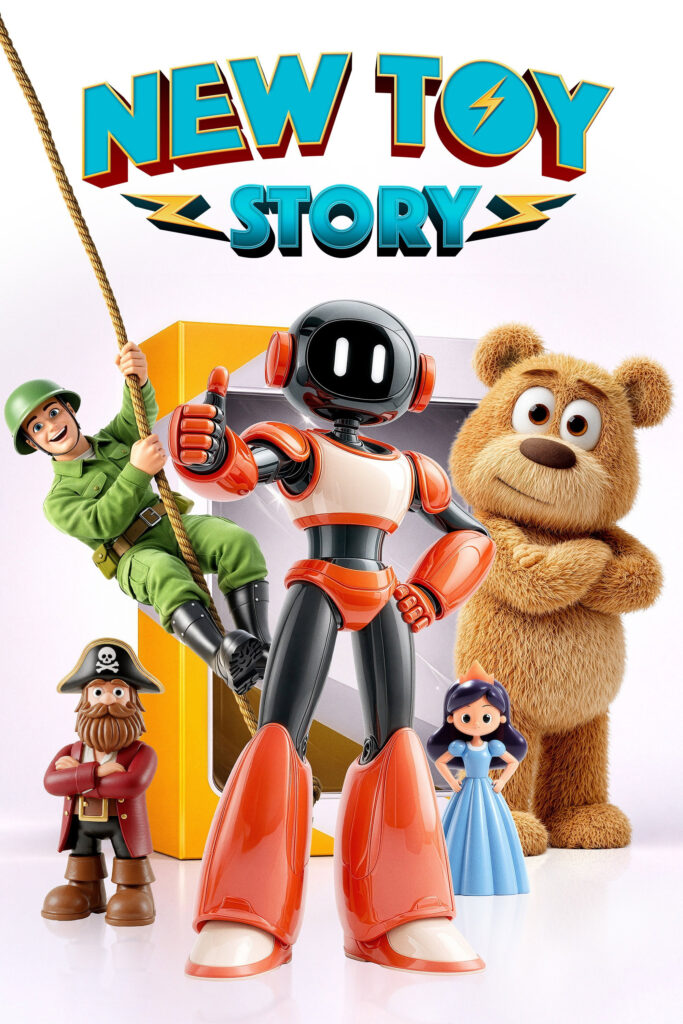
Louis (Bobby Beauchamp) has just turned ten years old. Waking up on his birthday, excitement should be in the air as his mother (Jaclynn Cherry) prepares pancakes and presents, including a brand-new companion toy named Pixel (Diamond Marie Buckley). Unlike an ordinary toy, Pixel can speak multiple languages and is designed to be an intelligent companion. However, this is not a normal birthday for Louis. It is his first birthday without his father, and the sadness surrounding that loss prevents him from fully enjoying the occasion before heading off to school. Meanwhile, outside the house, a group of toys secretly watch over him. The group includes Action Mack (D.C. Douglas), a veteran army toy who once belonged to Louis’ father, Princess Marisol (Diamond Marie Buckley), pirate Calico Joe (Jared Rivet), and Ozzie the teddy bear (Tom Arnold).
The toys immediately become suspicious of Pixel’s arrival, particularly Action Mack. Before long, Pixel attempts to help the group but accidentally launches Princess Marisol over a fence and into the neighbouring yard. With one of their own missing, the toys embark on a rescue mission through a series of backyards and unfamiliar territory, hoping to return home before Louis comes back from school.
A Familiar Story With Very Few Surprises
New Toy Story is a children’s animated film from The Asylum, the studio best known for producing mockbusters designed to resemble far more recognisable Hollywood releases. To avoid confusion, this film has absolutely nothing to do with Disney Pixar’s Toy Story franchise. Unfortunately, it is impossible not to compare the two. A new toy arrives. Existing toys are suspicious. Conflict occurs. The toys embark on an adventure. The similarities are immediately obvious, and the film rarely does enough to distinguish itself from the formula it borrows from. The biggest issue is how predictable everything becomes. Once the setup is established, there are very few surprises along the way. The rescue mission unfolds exactly as expected, and the story never evolves into anything more substantial than its basic premise. While younger viewers may remain entertained by the simple adventure, older audiences will likely see most developments coming long before they happen.
A Missed Emotional Opportunity
One of the film’s strongest ideas is introduced during its opening minutes. Louis is dealing with the loss of his father. That premise immediately creates the possibility for a heartfelt story about grief, healing, family, and moving forward. It’s a surprisingly emotional concept for a children’s film and one that many young viewers could potentially connect with. Unfortunately, the movie largely abandons this storyline in favour of the toy rescue mission. While Louis’ situation remains present in the background, the emotional aspects never receive the attention they deserve. By the time the film reaches its conclusion, the resolution feels rushed and underdeveloped. What could have been the film’s most memorable and meaningful storyline instead becomes little more than a footnote.
Generic Toys And A Discount Buzz Lightyear
Pixel emerges as one of the stronger characters, largely because she receives the most attention throughout the story. However, it is difficult not to view her as the film’s equivalent of Buzz Lightyear. Like Buzz, she arrives as a new and advanced toy whose presence immediately creates tension among the other toys. The difference is that Buzz Lightyear quickly became an iconic character. Pixel never reaches those heights. While she is reasonably likeable and serves her purpose within the story, she ultimately feels forgettable. The same criticism applies to most of the supporting toys. Action Mack, Marisol, Calico Joe, and Ozzie are all built around very simple personality traits. Few are given meaningful development, and most feel more like toy concepts than fully realised characters.
Animation That Becomes A Distraction
Without question, the film’s biggest weakness is its visual presentation. While I cannot confirm whether artificial intelligence played a role in the production process, portions of the animation possess an appearance that frequently feels unfinished and cheap. Combined with awkward movement, occasional lip-sync issues, recycled shots, and characters who sometimes appear to float above the ground rather than stand on it, the presentation struggles to immerse viewers in the world. However, the single biggest issue is the constant zooming and panning during conversations. For reasons I simply could not understand, characters rarely seem able to speak without the camera zooming into their faces, sliding across the screen, or constantly repositioning itself. Rather than creating energy, the technique quickly becomes exhausting. After a while, I found myself paying more attention to the camera movements than the dialogue itself. It is one of the most distracting visual choices I have seen in an animated film in quite some time.
The Music Never Stops
Another surprising issue is the soundtrack. Films naturally rely on music to enhance emotional moments, build tension, or support action sequences. New Toy Story, however, seems determined to play music almost nonstop. The score feels ever-present, often resembling the type of simplistic background music commonly heard in older television cartoons. Rather than complementing scenes, it gradually becomes repetitive and distracting. By the end of the film, its constant presence became difficult to ignore.
A Comedy Without The Laughs
As a family film, humour should be one of the movie’s strengths. Unfortunately, very little of it landed for me. The dialogue frequently feels overly childish, several jokes fail to generate laughs, and one particular near-swear gag feels especially out of place for the target audience. To be honest, the only times I laughed were when certain scenes became unintentionally funny due to awkward animation choices or strange filmmaking decisions. As comedy, the film largely misses the mark.
Final Thoughts
New Toy Story borrows heavily from the formula established by Pixar’s beloved franchise but fails to capture the heart, creativity, charm, humour, or emotional depth that made those films memorable in the first place. While I did appreciate the idea of sending the toys across multiple backyards on a rescue mission, and there are occasional attempts at adventure, the story remains overly simple, the characters are largely forgettable, and the emotional storyline involving Louis and his father feels frustratingly underdeveloped. The animation is ultimately where the film suffers the most. Between the repetitive camera zooms, recycled visuals, questionable animation quality, and various technical issues, the presentation becomes a constant distraction rather than an asset. I can admire The Asylum for attempting an animated feature and trying something different. Unfortunately, the final result feels more like a cheap imitation than a memorable family adventure. Those expecting Woody and Buzz on another magical journey should look elsewhere. What they will find instead is a simplistic mockbuster that struggles to justify its own existence beyond its title.
New Toy Story (2026) will be Available on DVD & Digital from November 4th thanks to Eagle Entertainment!
About the Reviewer
Peter Walkden
Film writer and curator with a deep passion for cinema, genre filmmaking, and physical media. Exploring new releases, cult favourites, and overlooked films, with a strong focus on atmosphere, storytelling, and the theatrical experience.
Connect
Instagram: https://www.instagram.com/walkdenentertainment/
Letterboxd: https://letterboxd.com/Peter_Walkden/
Website: https://walkdenentertainment.com/
More links and updates: https://linktr.ee/PeterWalkden