
Review published 16th August 2026
Watch the official trailer.
The Story
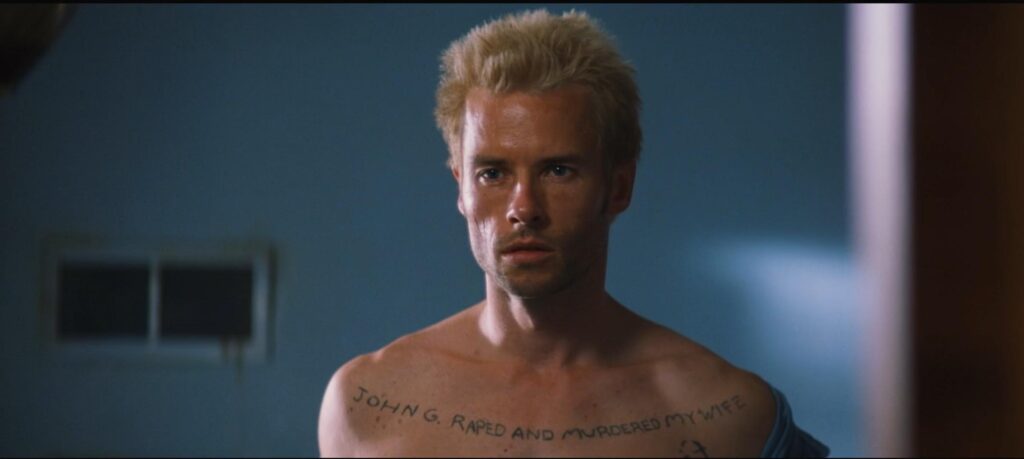
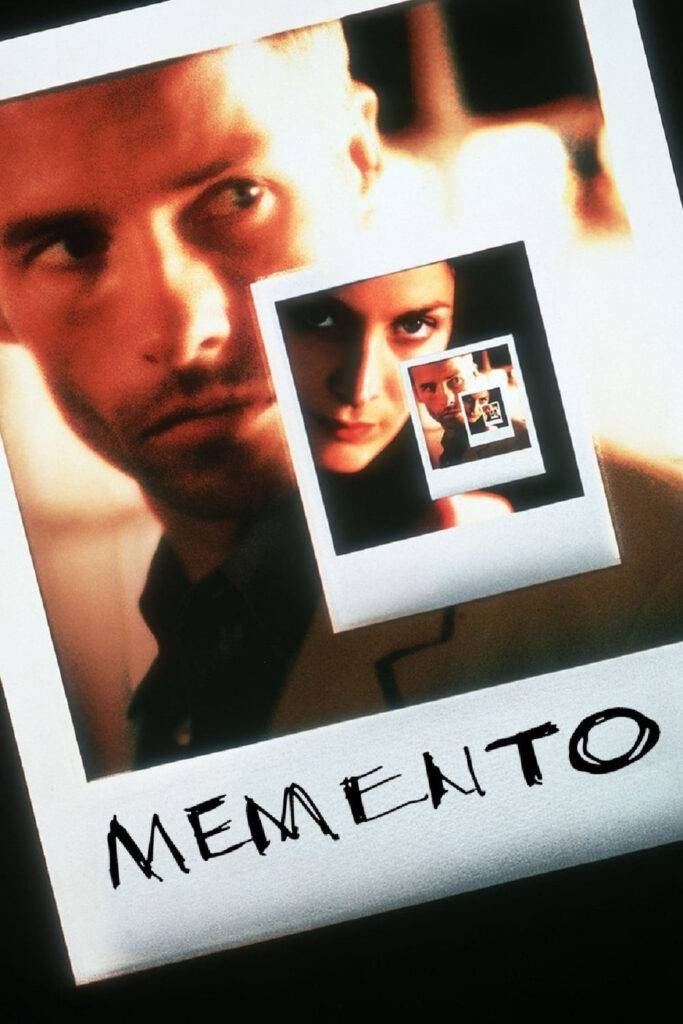
Leonard Shelby (Guy Pearce) suffers from severe short-term memory loss, leaving him unable to form new memories. He can hold conversations and carry out tasks, but moments later he may completely forget what was said or what he was doing. What Leonard does remember clearly is his life before the brutal attack that left him with his condition, an attack that also resulted in the murder of his wife. In the present day, Leonard spends every waking moment investigating her death, searching for reliable clues that he hopes will eventually lead him to her killer. To navigate each day, Leonard constantly writes himself notes and takes Polaroid photographs of locations, objects, and people, adding descriptions to each image so he can remind himself who and what he can trust. As Leonard follows the clues and gets closer to uncovering the truth about his wife’s murder, one question remains: even if Leonard discovers the truth, will he actually remember it?
A Unique Thriller Concept
Written and directed by Christopher Nolan, who would later direct films such as The Dark Knight (2008), Interstellar (2014), and The Odyssey (2026), Memento remains one of the filmmaker’s earliest and most impressive achievements. Although Nolan wrote and directed the film, Memento is based on a short story by his brother, Jonathan Nolan. When it comes to genre, Memento is best described as a mystery thriller, and trust me, the mystery aspect is fantastic. The film continually keeps audiences questioning what is true and who can actually be trusted. What makes Memento such an effective thriller is Leonard’s condition itself. Rather than following a traditional detective searching for clues, Leonard often already possesses clues and information but struggles to understand how everything fits together. Because his memory constantly resets, audiences are forced to experience many of the same uncertainties he faces. This creates a unique viewing experience where viewers are continually questioning not only those around Leonard but occasionally Leonard himself. The result is a thriller unlike anything I had seen before, and even today it remains one of the most original concepts ever brought to the genre.
Christopher Nolan’s Bold Storytelling
For me personally, Memento was a film that greatly impacted me upon first viewing and was the first film that introduced me to the name Christopher Nolan. Nolan not only delivered a fresh kind of thriller but also introduced a unique way of telling the story. The film unfolds through two timelines; one moving forwards and the other moving backwards. While that may sound confusing on paper, Nolan executes the concept remarkably well. The use of black-and-white sequences for one timeline and colour for the other is a simple but highly effective storytelling device that helps guide audiences through the narrative. While some viewers may initially feel disoriented, I found the structure surprisingly easy to follow after only a few scenes. Rather than becoming frustrating, the film’s unusual structure becomes one of its greatest strengths. As both timelines slowly move towards each other, viewers gradually uncover the truth alongside Leonard, creating a mystery experience that feels completely unique. Interestingly, this fascination with time, perspective, and unconventional storytelling would become a recurring theme throughout Nolan’s later career, appearing in films such as Tenet, Inception, and Interstellar.
A Mystery That Rewards Repeat Viewings
When it comes to the story itself, Memento is loaded with twists, turns, revelations, and surprises. Once you begin watching Leonard unravel one mystery, it becomes almost impossible not to become invested. The deeper he digs into his investigation, the more questions begin to emerge about his past, his present, and the people around him. Characters such as Teddy (Joe Pantoliano) and Natalie (Carrie-Anne Moss) continually keep both Leonard and the audience guessing. Given Leonard’s condition, all he can rely on are the clues and notes he leaves for himself, making every interaction feel uncertain. One of the film’s greatest accomplishments is how rewarding it becomes on repeat viewings. Once audiences know the truth behind the mystery, earlier scenes often take on entirely different meanings. Character motivations become clearer, subtle clues become far more noticeable, and moments that initially seem insignificant reveal greater importance. Few thrillers reward repeat viewings as effectively as Memento.


Exceptional Performances
As far as performances go, this remains my favourite performance from Guy Pearce. The role requires him to balance confusion, grief, determination, vulnerability, frustration, and suspicion, often within the same scene. More importantly, Pearce makes Leonard a deeply sympathetic character. Despite his flaws, audiences cannot help but feel invested in his search for answers and the emotional pain caused by the loss of his wife. The challenge of portraying a man living with severe memory loss must have been incredibly difficult, yet Pearce makes it feel completely believable. Throughout the film, he successfully conveys a wide emotional range, from mystery and tension to genuine sadness and suffering. Carrie-Anne Moss is also excellent as Natalie, bringing an air of mystery that keeps audiences questioning her intentions throughout. Joe Pantoliano, meanwhile, delivers one of the film’s most entertaining performances as Teddy. At times funny, at times suspicious, and often as slick as a used-car salesman, Teddy remains one of the film’s most memorable characters and constantly keeps viewers guessing.
A Subtle But Powerful Score
The film’s score is another element that deserves praise. While often understated, the music remains incredibly effective throughout. Eerie compositions accompany even the simplest moments, creating a constant sense of unease and uncertainty. The score continually had me wondering what was going to happen next. It also perfectly complements many of the film’s biggest revelations, helping to enhance the emotional impact of key scenes and contributing significantly to the film’s unforgettable finale.
Final Thoughts
Overall, Memento is a fantastic thriller and one that continues to reward me every time I revisit it. With exceptional performances, a gripping mystery, innovative storytelling, and remarkable rewatch value, the film remains one of Christopher Nolan’s finest achievements. What begins as a murder investigation gradually evolves into something far more complex, surprising, and emotionally powerful. The mystery itself remains the film’s greatest strength, continually encouraging audiences to question every clue, every character, and even Leonard himself. Combined with Nolan’s clever structure and Guy Pearce’s outstanding performance, the result is a thriller that feels just as fresh and engaging today as it did upon release. If you have never seen Memento, do yourself a favour and change that. Just be sure to give it your full attention.
Memento (2000) is Now Available on Digital thanks to Umbrella!

About the Reviewer
Peter Walkden
Film writer and curator with a deep passion for cinema, genre filmmaking, and physical media. Exploring new releases, cult favourites, and overlooked films, with a strong focus on atmosphere, storytelling, and the theatrical experience.
Connect
Instagram: https://www.instagram.com/walkdenentertainment/
Letterboxd: https://letterboxd.com/Peter_Walkden/
Website: https://walkdenentertainment.com/
More links and updates: https://linktr.ee/PeterWalkden