
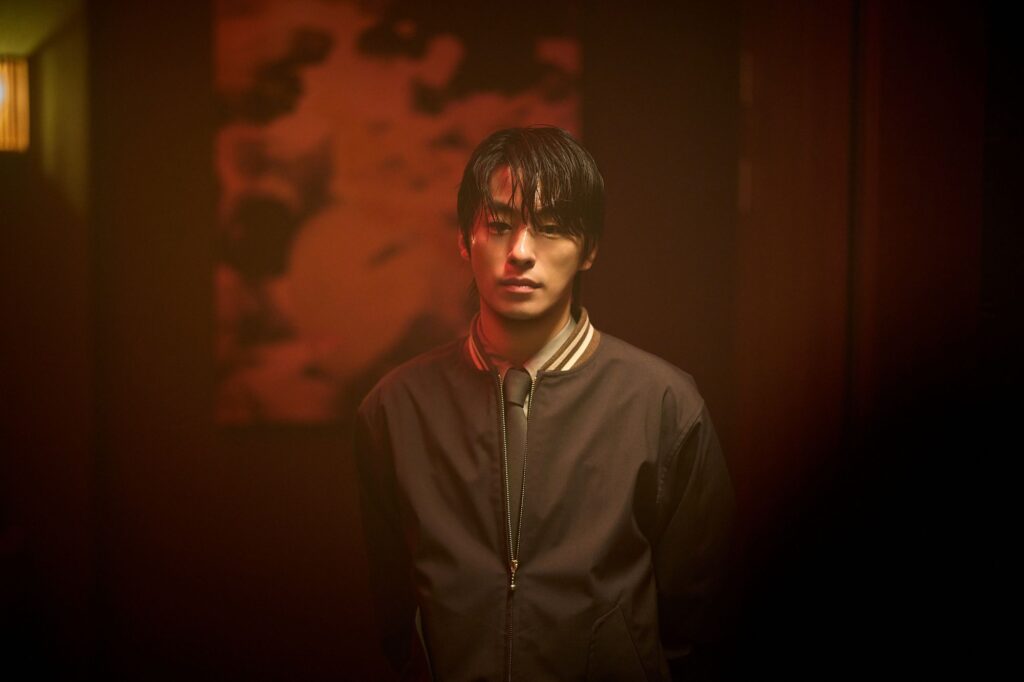
Review published 7th June 2026
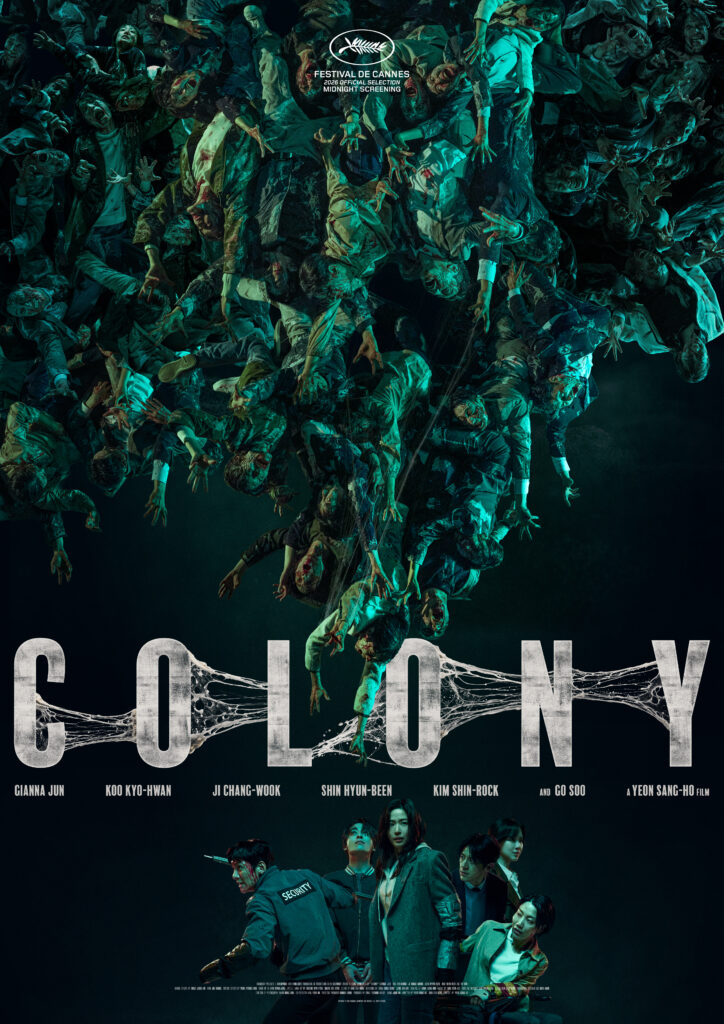
Watch the official trailer.
A mysterious conference reunion and a groundbreaking scientific revelation unfold.
When Professor Kwon Se Jeong (Jun Ji Hyun) receives a mysterious, anonymous invitation to attend a biotechnology conference she accepts out of sheer curiosity. Also attending the conference is Se Jeong’s ex-husband, Kang Woo Cheol (Kim Jong Tae), and the pair decide to spend some time catching up. The conference’s keynote speaker, Professor Han Gyu Seong (Go Soo), unveils a groundbreaking scientific breakthrough when he takes to the stage, leaving those in attendance astonished by the extraordinary announcement.
A bioterror attack unleashes a zombie outbreak, trapping survivors in a deadly lockdown.
Directly after the presentation, a mysterious emergency call is made warning authorities that a bioterrorist attack is about to take place at the conference and the shopping complex located beneath the convention centre. We also meet Dr Seo Yeong Cheol (Koo Kyo Hwan), a scientist whose research has been stolen. His research findings could potentially create a new form of humanity, rendering humans as we know them obsolete. To prove the effectiveness of his current research, Seo injects Professor Han Gyu Seong. The result is horrifying, and Han transforms into a violent, zombie-like creature that begins attacking innocent people, infecting them and triggering a rapidly spreading outbreak. As chaos engulfs the complex, Kwon and several other survivors become trapped inside a retail store, desperately searching for a way to stay alive. Outside, police seal off the entire centre in an attempt to prevent the virus from spreading to the world. Using her expertise as a professor, Kwon begins studying the infected from within the lockdown zone, hoping to learn more about their behaviour and uncover a possible way to survive. But with the creatures growing stronger and seemingly more intelligent with each passing hour, the odds are stacked against them. Can Kwon and the remaining survivors withstand the ultimate zombie onslaught, or will they too succumb to the infection and join the ever-growing horde of flesh hungry monsters?
A Korean horror sci fi thriller blending mystery, action, and outbreak survival from the director of Train to Busan.
Colony is a Korean horror film with an engaging blend of mystery, action, and science fiction. As the story unfolds, the film gradually expands beyond its horror roots, introducing intriguing sci-fi elements that add another layer to the narrative. The film was co-written (with Choi Kyu Seok) and directed by Yeon Sang Ho, a filmmaker who is no stranger to the horror genre or stories centred around deadly outbreaks. His previous directorial credits include the acclaimed zombie thriller Train to Busan (2016), its sequel Peninsula (2020), as well as several other genre projects, making him a natural fit for a film of this nature.
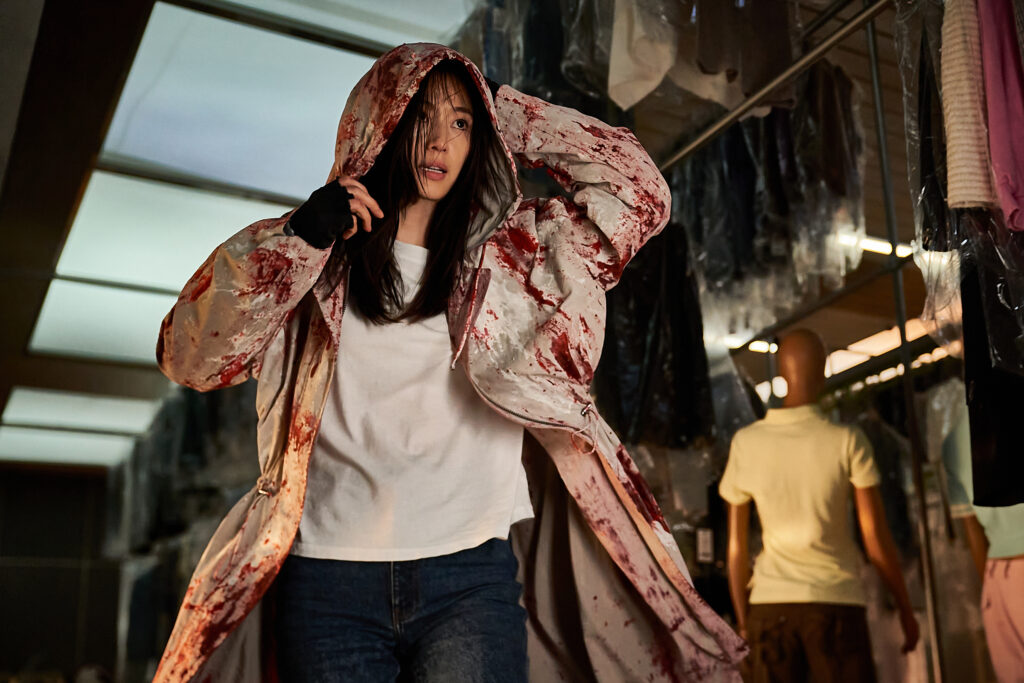
Colony’s zombies evolve from mindless to intelligent, adding a fresh twist to the genre.
One of Colony’s greatest strengths is its zombies. As audiences have come to expect from Yeon Sang Ho’s previous work, the infected are brought to life through excellent makeup effects, costuming, and plenty of bloody, oozing practical horror. What makes these creatures particularly interesting; however, are the fresh concepts surrounding their behaviour. In the early stages of the outbreak, the zombies are far from intelligent. Many are seen attacking promotional standees, digital billboards, and other images of people, seemingly unable to distinguish them from real humans. They also struggle to accurately track scents when hunting survivors, creating several tense and unique moments throughout the film. I loved the physical performances. Watching the infected crawl, stumble, and essentially relearn how to walk adds an unsettling layer of realism to their transformation. As the story progresses, the zombies gradually evolve, becoming stronger, smarter, and more dangerous. This constant progression keeps the film exciting and injects a refreshing level of creativity into a genre that often relies on familiar ideas.
Strong ideas and visuals are held back by slow pacing, weak character development, and predictable twists.
However, while Colony succeeds in many areas, particularly with its core threat and zombie concepts, it struggles in several others. Like Peninsula (2020), also directed by Yeon Sang Ho, I found myself admiring the film’s ideas more than the film itself. It looks great, features some genuinely intriguing concepts, and has the foundation for a compelling story, but it often struggles to fully engage its audience. One of the biggest issues is the pacing. Colony takes quite some time to find its footing and, until the outbreak truly kicks into gear, viewers are subjected to lengthy stretches of scientific and technological exposition. While these elements are important to the plot, they often feel unnecessarily complex and muddled, slowing the momentum rather than building suspense. The film also gives viewers very little reason to become invested in its central characters. Their introductions are vague, their personalities are only lightly explored, and as a result, it can be difficult to form an emotional connection with them. This lack of character development weakens many of the film’s dramatic moments, particularly when the stakes begin to rise. While the mystery elements are a welcome addition, including the question of who invited Professor Kwon Se Jeong to witness the unfolding chaos firsthand, many of the film’s revelations are surprisingly predictable. On multiple occasions, I found myself waiting for the lead characters to catch up to conclusions that seemed obvious well in advance, reducing the impact of several twists and discoveries.
Striking zombie visuals and strong ideas are undermined by weak character depth and a predictable story.
Overall, director Yeon Sang Ho continues his focus on zombie outbreak narratives with Colony, a film that strongly excels in its ideas, costume design, and visualisation of a new kind of infected creature. The film delivers striking imagery, with chaos, bloodshed, and escalating mayhem taking centre stage as the outbreak unfolds. However, while it is visually impressive, I struggled to connect with the film’s leads on a deeper level. The character development is limited, and the progression of the storyline, including the outbreak itself, often feels formulaic, as though it has been seen many times before. Even with its intriguing mystery elements, the film remains too predictable on multiple occasions, with several twists and revelations feeling obvious well in advance. For fans of violent zombie films, Colony still offers a solid experience, but much like Peninsula, I found it works better as a one-time viewing rather than a film I would be eager to revisit.
Colony (2026) will be Available in Australian Cinemas from June 11th, thanks to K-Movie Entertainment!
About the Reviewer
Peter Walkden
Film writer and curator with a deep passion for cinema, genre filmmaking, and physical media. Exploring new releases, cult favourites, and overlooked films, with a strong focus on atmosphere, storytelling, and the theatrical experience.
Connect
Instagram: https://www.instagram.com/walkdenentertainment/
Letterboxd: https://letterboxd.com/Peter_Walkden/
Website: https://walkdenentertainment.com/
More links and updates: https://linktr.ee/PeterWalkden