
Review published: 10th August 2026

Watch the official trailer.
The Premise
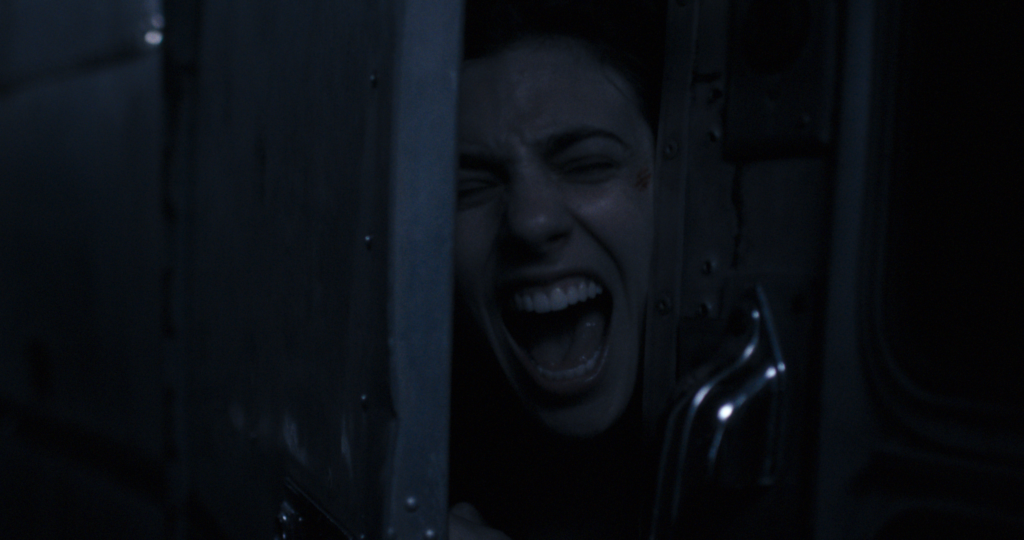
A woman (Dakota Gorman) awakens on the floor and quickly discovers she is trapped inside the rear compartment of a moving camper. Disoriented and frightened, she searches for a way out, but the doors are locked and securely sealed, leaving her with no obvious means of escape. While exploring the camper, she discovers a small opening that appears to lead into another section, possibly the driver’s compartment. Desperate for help, she screams, pleads, and cries out, but her attempts are met with silence.
That soon changes when a mysterious voice comes through a speaker inside the camper. The man (voiced by Todd Terry) claims to be the driver and reveals that the woman has been infected. With the clock ticking and only one hour remaining, he explains that he is attempting to get her to a hospital where she can receive urgent treatment and hopefully survive. The driver reassures the terrified woman that he is not her enemy and insists that his intentions are genuine. He encourages her to remain calm and introduces himself as Clive. It is then revealed that the woman’s name is Lena, and as the journey continues, the terrifying truth behind her situation begins to unfold.
A Strong Feature Debut
Hellcat is best described as a horror film, but more importantly, it is also a psychological thriller. Trust me, the above description has been intentionally kept vague for multiple reasons, as much of the film’s effectiveness comes from discovering the mystery and slowly uncovering the truth alongside its characters. The film has been written and directed by Brock Bodell, whose previous work includes the short film Grief (2019), which he co-directed. Hellcat serves as Bodell’s official feature directorial debut, and it is exciting to say that he has delivered a remarkably impressive first feature, blending horror, suspense, and thriller elements into an atmospheric experience.
The Camper Becomes A Prison
The setting of Hellcat is something I admired for multiple reasons. Firstly, the concept of a woman being trapped not only inside a camper but inside one that is actively in transit feels refreshingly unique. It is a confined location that feels unfamiliar compared to many other survival horror and thriller films, allowing the movie to create a strong sense of isolation and vulnerability. What makes the concept particularly effective is the complete lack of control afforded to Lena. She is essentially trapped inside a moving prison with no way of contacting the outside world, no means of opening the doors, and no influence over where she is being taken. The constant movement of the camper reinforces this helplessness and creates a scenario where both Lena and the audience experience much of the mystery.
Mystery Comes First
Naturally, the film provides very little information to audiences to begin with, meaning patience is required as the mystery gradually unfolds. As the story progresses, more details are revealed about Lena, including her background, what has happened to her, and the terrifying circumstances surrounding her current situation. The mysterious voice coming through the camper’s speaker adds another layer, creating constant uncertainty. Is the driver telling the truth, or does he have something far more sinister planned for Lena? Interestingly, I often found myself trusting Clive more than I expected, despite the film encouraging viewers to remain suspicious. This uncertainty becomes one of the story’s strongest elements. While Hellcat is marketed as a horror film, I found its mystery elements to be far more compelling than its scares. Much of the enjoyment comes from uncovering the truth behind Lena’s condition and piecing together the larger mystery surrounding her situation. These questions kept me invested throughout the film far more than the horror elements themselves.
Atmosphere And Strong Performances
The film embraces a consistently dark and atmospheric tone, with the entire story unfolding at night. The limited lighting and enclosed environment enhance the feeling of isolation and uncertainty, making Hellcat a film best experienced during a late-night viewing. Dakota Gorman carries much of the film’s emotional weight, delivering a performance that effectively captures Lena’s fear, confusion, vulnerability, and determination. As more details emerge surrounding both her past and present circumstances, Gorman is required to navigate a wide emotional range while keeping audiences invested in the unfolding mystery. The supporting cast also deliver believable portrayals throughout. However, some of the supporting characters introduced later in the film feel less natural and not quite as well integrated into the story when compared to the leads.
Not Every Reveal Lands
As a story, there are several elements that I found predictable on a first viewing, with some details feeling so obvious that the film occasionally feels like it is spoon-feeding the audience, particularly when it comes to certain character revelations and story developments. Despite this, viewers will likely remain invested simply to see how everything comes together. The film’s climax delivers further major reveals and unexpected turns that help justify the journey. From a plot perspective, there are also certain details that do not fully add up. While I enjoyed the film on a first viewing, some of the smaller inconsistencies become more noticeable upon reflection and may leave some viewers questioning whether they missed important information or misunderstood certain story elements.
Final Thoughts
Overall, Hellcat serves as an impressive feature debut from Brock Bodell, who not only directed the film but also wrote the screenplay. The film immediately draws viewers in with its intriguing setup and places its protagonist in a situation of genuine danger, with the unique concept and confined location providing a refreshing approach to the genre. While some of the character revelations and plot developments can be predictable, there remains an undeniable sense of curiosity in watching the pieces come together. The mystery is ultimately the film’s greatest strength, with audiences constantly searching for answers alongside Lena as the truth gradually unfolds. With its dark atmosphere, nighttime setting, and strong central performance from Dakota Gorman, Hellcat succeeds far more as a mystery-driven psychological thriller than a traditional horror film. Those expecting constant scares may need a little patience, but viewers who enjoy slowly unfolding mysteries, psychological tension, and stories packed with twists and revelations should find plenty to appreciate. For fans of mystery-driven horror and psychological thrillers, Hellcat is definitely worth seeking out.
Hellcat (2025) will be Available on Shudder in Australia & New Zealand from August 14th!
About the Reviewer
Peter Walkden
Film writer and curator with a deep passion for cinema, genre filmmaking, and physical media. Exploring new releases, cult favourites, and overlooked films, with a strong focus on atmosphere, storytelling, and the theatrical experience.
Connect
Instagram: https://www.instagram.com/walkdenentertainment/
Letterboxd: https://letterboxd.com/Peter_Walkden/
Website: https://walkdenentertainment.com/
More links and updates: https://linktr.ee/PeterWalkden