
Review published 22nd August 2026
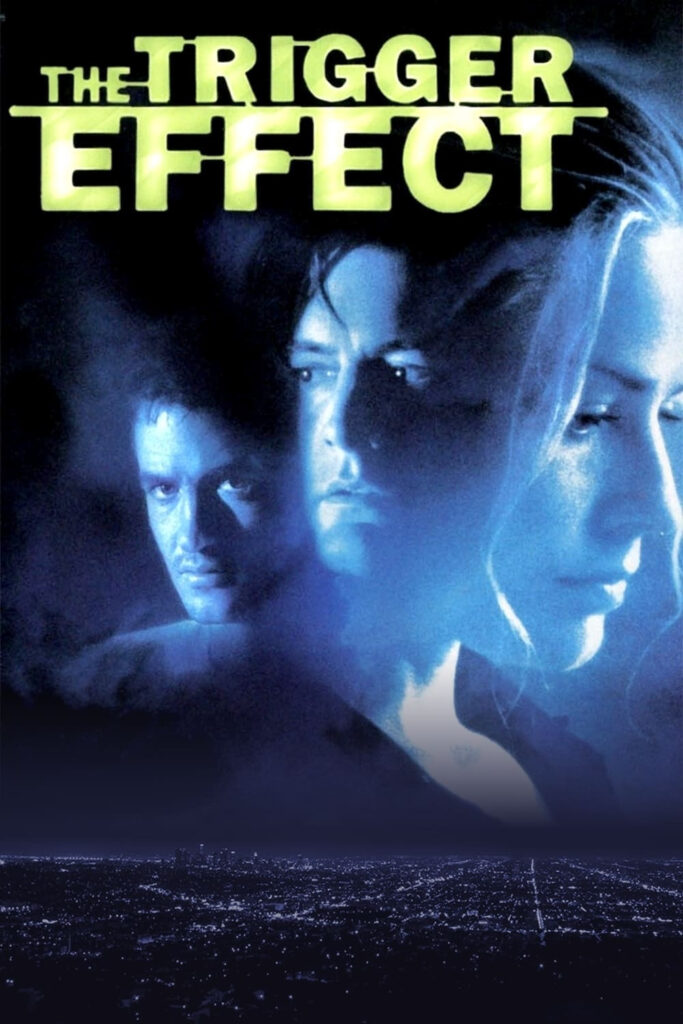
Watch the official trailer.
The Story
It was supposed to be a pleasant night out for Matthew (Kyle MacLachlan) and Annie (Elisabeth Shue). The couple arrange a babysitter, head to the cinema, and attempt to enjoy a rare evening together. However, frustrations quickly begin to emerge. Annie is subjected to a rude confrontation by another moviegoer, while Matthew chooses not to intervene, instead suggesting they simply move seats. The outing proves disappointing, and things only worsen when they return home to find their baby unwell and their house presenting yet more maintenance problems.
To cap off an already frustrating night, the couple attempt a moment of intimacy, only to be interrupted by their crying child. However, those everyday annoyances are about to become insignificant compared to what happens next. As Matthew and Annie settle into bed, their home suddenly loses power. Soon it becomes apparent that the entire neighborhood and surrounding community have been affected. Assuming the issue will be resolved overnight, the family decides to wait it out. By morning, the situation has become far more serious. The electricity remains out, local radio stations are no longer broadcasting, grocery stores cannot process card payments, and basic services are beginning to fail. Meanwhile, their baby’s ear infection continues to worsen. When Matthew discovers he cannot obtain the required medication through normal means, he resorts to a desperate act he never imagined himself committing. Joining the household during this unusual situation is Joe (Dermot Mulroney), a close friend who becomes stranded due to traffic issues and roadblocks. Together, the group must navigate a world suddenly stripped of its conveniences, while fear, paranoia, and tension slowly begin to creep into their lives.
When Convenience Disappears
The Trigger Effect is best described as a drama with strong thriller elements that gradually emerge as the story unfolds. The film was written and directed by David Koepp, whose directing credits include Stir of Echoes (1999), Secret Window (2004), Premium Rush (2012), and You Should Have Left (2020). Upon first viewing, I couldn’t help but be reminded of The Mist (2007), another film that explores how people react when faced with uncertainty and fear. However, while The Mist leans heavily into horror, The Trigger Effect remains far more grounded and realistic. What makes the film interesting is that the blackout itself is not the true threat. Instead, the power outage acts as a catalyst that exposes people’s fears, insecurities, and survival instincts. As services fail and uncertainty grows, paranoia and desperation begin taking hold of ordinary people. The film asks an intriguing question: How quickly do people change when the comforts and conveniences they take for granted suddenly disappear?
Matthew’s Transformation
Matthew proves to be the film’s most fascinating character. To be honest, I didn’t always like him. Early in the film, his reluctance to stand up for Annie during the cinema confrontation is frustrating to watch and paints him as someone who often avoids conflict. However, that same character flaw makes his development all the more interesting. As the situation worsens and his family’s wellbeing becomes increasingly threatened, Matthew begins making decisions he likely never would have considered under normal circumstances. Whether it’s stealing medicine, becoming more suspicious of others, or taking greater responsibility as the protector of his household, the blackout slowly transforms him into a very different person. As a parent myself, I found many of these choices understandable, even when they were morally questionable. The film succeeds because it constantly encourages viewers to ask themselves what they would do in a similar situation.
Strong Ideas And Slow-Burning Tension
The tension within The Trigger Effect builds gradually rather than relying on constant suspense. This is very much a slow-burning thriller where the unease comes from watching everyday life steadily unravel. The uncertainty surrounding the blackout, combined with the growing distrust of neighbours and strangers, creates a persistent feeling that something bad is around the corner. The concept itself stayed with me long after the credits rolled. Watching people adapt to a world without electricity, functioning communication systems, or access to basic resources feels surprisingly believable. While some of the events are heightened for dramatic effect, the overall reactions of the characters feel realistic enough to make the scenario uncomfortable. Annie’s character never feels quite as compelling as Matthew’s journey, despite Elisabeth Shue delivering a solid performance. Likewise, Joe ultimately feels like the film’s weakest major character. While his presence introduces additional conflict within the household, his introduction feels somewhat forced and occasionally resembles something pulled from a television soap opera rather than a grounded thriller. Still, the performances across the board remain convincing enough to maintain interest.
An Ending That Doesn’t Deliver
Unfortunately, my biggest criticism comes from the film’s conclusion. After spending so much time building tension, drama, uncertainty, and conflict, the ending arrives rather abruptly. Rather than providing a satisfying payoff, it feels rushed and somewhat incomplete. The journey leading up to the finale is engaging, and I found myself genuinely invested in the fate of the characters. However, when the film finally reaches its conclusion, it never feels as though it fully rewards the audience for that investment. While some viewers may appreciate the ambiguity, I found the ending frustrating because it seemed to leave several important ideas and developments without meaningful resolution. The film doesn’t necessarily end badly; it simply ends far too suddenly. Given the quality of the build-up throughout the majority of the runtime, the finale feels like a notable missed opportunity.
Final Thoughts
Overall, The Trigger Effect is an engaging and thought-provoking thriller-drama that explores how ordinary people react when society’s basic comforts begin to disappear. Its greatest strength is not the mystery surrounding the blackout itself but the way it examines fear, paranoia, desperation, and the gradual breakdown of human behaviour under pressure. Matthew’s transformation from a passive and uncertain man into someone willing to make increasingly desperate choices for his family provides the film’s strongest character arc. The performances are strong, the concept remains compelling, and the slow-burning tension keeps audiences invested throughout. Unfortunately, the rushed ending prevents the film from reaching its full potential and significantly weakens what could have been a far more memorable finale. Even so, the journey remains worthwhile. For fans of character-driven thrillers, survival dramas, and films that explore how people respond when normal life suddenly falls apart, The Trigger Effect is certainly worth seeking out.
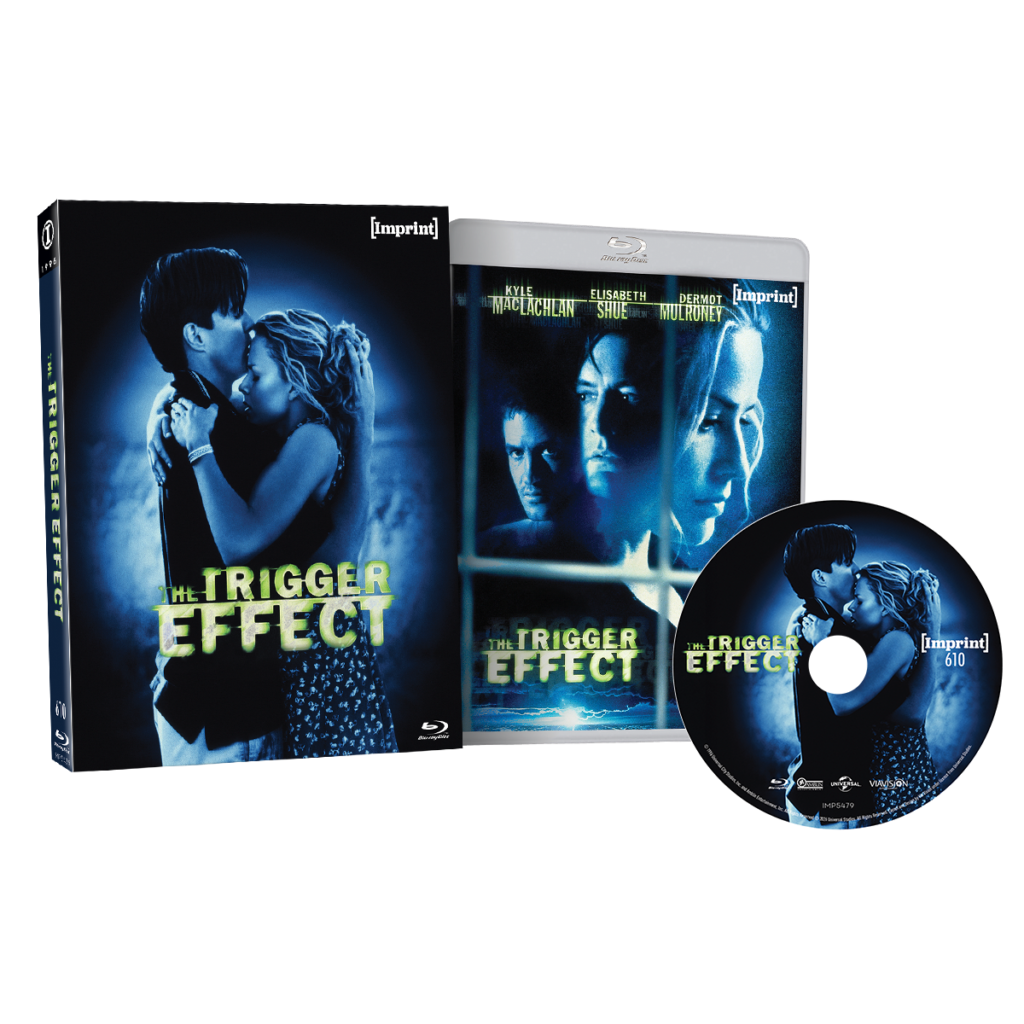
The Trigger Effect (1996) will be Available on Blu-ray thanks to Imprint Films!

About the Reviewer
Peter Walkden
Film writer and curator with a deep passion for cinema, genre filmmaking, and physical media. Exploring new releases, cult favourites, and overlooked films, with a strong focus on atmosphere, storytelling, and the theatrical experience.
Connect
Instagram: https://www.instagram.com/walkdenentertainment/
Letterboxd: https://letterboxd.com/Peter_Walkden/
Website: https://walkdenentertainment.com/
More links and updates: https://linktr.ee/PeterWalkden