
Review published 10th June 2026
Watch the official trailer.
Life at the Pièta: Cecilia’s World of Music, Duty, and Expectation
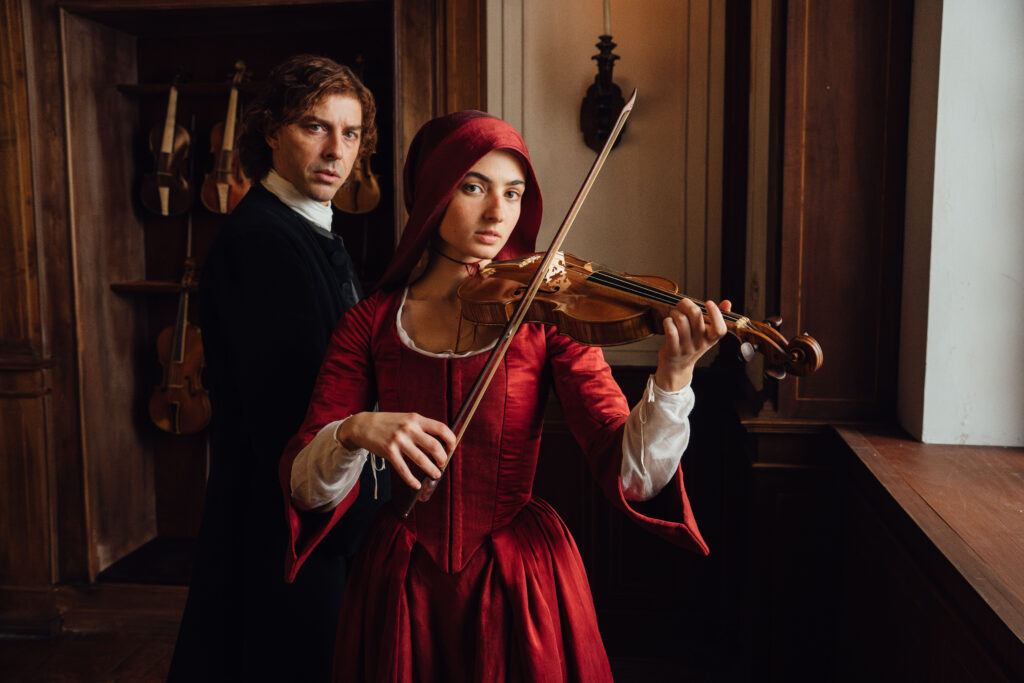
In 18th century Venice, Cecilia (Tecla Insolia) is a twenty-year-old woman living at the Ospedale della Pièta orphanage alongside many other women around her age. Each day Cecilia cleans and helps others around the orphanage as well as playing violin in a skilled orchestra that performs on Sundays. While the orphanage focuses on raising young women without a family or home, it is also deeply concerned with financial matters. As a result, arrangements have been made for Cecilia to marry when her future husband returns from the war. Until he returns home, she continues her day to day life, refining her skills on violin.
A Turning Point for Cecilia: Vivaldi’s Arrival and a New Path Through Music
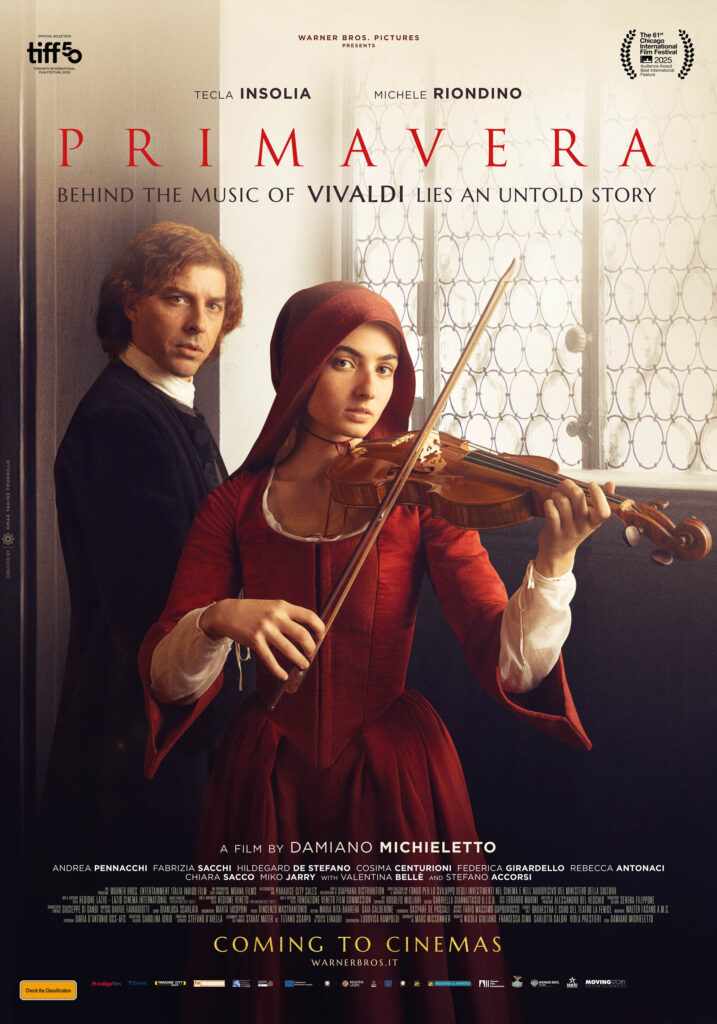
However, Cecilia’s life and world are about to change. When the leaders of the orphanage and church discover that, despite attracting large audiences to their orchestra performances, tithes and donations are instead flowing to rival churches, they realise something must be done. Determined to improve both the quality and reputation of the orchestra, they appoint Antonio Vivaldi (Michele Riondino), a gifted composer, as their new master composer. Vivaldi’s arrival begins to stir something within Cecilia, especially when he appoints her as first violin, a role she initially sees as pointless given her upcoming arranged marriage. However, as Cecilia continues to perform under Vivaldi’s guidance and learns from his knowledge and passion for music, she begins to discover a strength and confidence she never knew she possessed. In doing so, she finds herself drawn towards a new path in life, one that challenges the future others have chosen for her.
Damiano Michieletto’s Artistic Vision Behind Primavera
Primavera is an Italian drama with strong elements of music and history. The film was directed by Damiano Michieletto, whose previous works include Gianni Schicchi (2021), La Bohème (2012), and Rossini: Il Barbiere di Siviglia (2016), among many others. Looking at Micheletto’s body of work, it is clear that he has a deep passion for the arts, music, classical history, ballet, live performance, and theatre. This background makes him a particularly fitting choice to bring Primavera and its rich musical world to the screen.
A Visually Rich and Emotionally Resonant Drama with a Standout Central Performance
Funny enough, I’m not personally a fan of classical music by any means, and if you’re the same, Primavera will still draw you in as an audience member thanks to its outstanding visuals and remarkable attention to detail, particularly in its costume design. The film’s themes are both unique and compelling, exploring friendship, trust, and the transformative power that music can have on a person’s life. It makes for a refreshing and deeply rewarding cinematic experience. The performances are equally impressive, delivering characters who feel both believable and heartfelt. Tecla Insolia is especially strong as Cecilia, a young woman who feels trapped within the confines of her life at the orphanage. Beneath her quiet exterior lies a deep longing for answers, particularly her hope that one day her birth mother will appear at the orphanage’s doorstep and reveal herself. It is this emotional vulnerability that makes Cecilia such a compelling character to follow throughout the film.
A Deliberate Slow Burn That Rewards Patience with Emotional Payoff
The pacing here is undeniably slow, and interestingly, there is very little plot progression throughout much of the film’s runtime until a significant shift occurs during the third act. For some viewers, this may be seen as a negative, particularly those looking for a more event driven narrative. Surprisingly, however, the slower pace never became an issue for me. Even during its quietest moments, I found myself completely engaged and locked into what was unfolding on screen. The film’s rich atmosphere, strong performances, and attention to detail continually held my interest, while the promise of something meaningful and rewarding kept me invested in Cecilia’s journey. When those emotional payoffs finally arrive, they feel well earned, making the film’s dramatic moments all the more impactful. The grounded and realistic approach to its drama is also one of its greatest strengths, allowing the story and its characters to resonate on a deeper level.
A Beautifully Crafted Period Drama That Rewards Patience with Emotion and Atmosphere
Overall, Primavera is a rich blend of weighty drama and striking beauty. From its stunning atmosphere and convincing period setting to its gorgeous visuals and detailed costume design, the film is consistently captivating to look at. The performances are terrific, delivering characters who feel both deeply human and easy to invest in. While the story unfolds at a slow pace, I never found that to be a major drawback. The film’s immersive atmosphere and emotionally rewarding drama make it a pleasure to linger in, allowing its themes of trust, friendship, and the power of music to resonate in a meaningful and memorable way.
Primavera (2025) will be Available in Australian Cinemas from June 11th thanks to Rialto Distribution!
About the Reviewer
Peter Walkden
Film writer and curator with a deep passion for cinema, genre filmmaking, and physical media. Exploring new releases, cult favourites, and overlooked films, with a strong focus on atmosphere, storytelling, and the theatrical experience.
Connect
Instagram: https://www.instagram.com/walkdenentertainment/
Letterboxd: https://letterboxd.com/Peter_Walkden/
Website: https://walkdenentertainment.com/
More links and updates: https://linktr.ee/PeterWalkden